
PRECICE Max
PRECICE Max Intramedullary Nail
Newest-generation magnetic PRECICE nail — stronger motor, thicker build, higher weight-bearing than PRECICE 2.
PRECICE Max is the newest and thickest titanium version of the PRECICE magnet nail, cleared by the FDA on 15 December 2023 and first implanted in February 2024. It lengthens the femur or tibia the same way as PRECICE 2 but with larger nails and screws, aimed at patients who need a stronger implant. No peer-reviewed outcome series exists yet.
How it works
PRECICE Max extends the PRECICE platform with a stronger magnetic motor and thicker nail options (10, 11.5 and 13 mm per the manufacturer) built for higher load; the manufacturer publishes strength comparisons as "data on file" and no explicit weight limit. It received FDA 510(k) clearance on December 15, 2023 (K232267), and the first US surgery was performed at the Paley Institute in February 2024. It is the current successor generation to PRECICE 2 and the modern replacement for the recalled Stryde; long-term outcome data is still accumulating, and a Class II recall of 164 Max devices was opened in September 2024.
Schematic. Bone geometry and hardware placement are illustrative; consult your surgeon for procedure specifics.
How it works, and what changed from PRECICE 2
The Max is a PRECICE nail at heart. The FDA 510(k) summary (K232267) describes the same principle of operation, distraction osteogenesis driven by a magnetic mechanism, the same titanium alloy (Ti-6Al-4V ELI, ASTM F136), and compatibility with the existing External Remote Controllers, ERC 1 through ERC 4P. Your daily routine is therefore the PRECICE routine: short sessions holding the controller over the magnet, on a prescribed schedule, with X-rays to check the regenerate. See the PRECICE 2 page for the session-by-session detail.
What changed is size. The 510(k) lists two technological differences from its predicate: a larger nail diameter and a larger screw diameter. Globus Medical's product page gives nail diameters of 10, 11.5 and 13 mm, partially threaded screws designed for bi-cortical purchase, and larger distal screw holes than PRECICE 2. The company claims a 2.6-fold improvement in dynamic bending strength and 1.3-fold in rotational stability over PRECICE 2, footnoted as "mechanical testing data on file". Those are bench figures, not patient outcomes.
Who it suits, and who it does not
The indications are identical to the current PRECICE label: limb lengthening, fracture fixation, non-unions and bone transport of long bones in patients 18 and older, and femur or tibia lengthening in children over 12. The Max is pitched at the patient PRECICE 2 serves awkwardly: heavier, taller, or planning bilateral femurs and unwilling to spend months on crutches. Whether it delivers that depends on a weight-bearing allowance the manufacturer has not published on its product page; the strength multipliers are the only numbers offered.
Exclusions follow the family. The FDA's June 2023 letter on titanium PRECICE devices tells surgeons not to implant in patients under 50 lb or above the IFU's maximum weight, not to implant more than two devices at once, and to remove the device after one year. The canal must take a 10 to 13 mm nail, which a narrow canal may not accept. And because the drive is a magnet, the questions that apply to PRECICE 2, pacemakers and MRI access, apply here; ask to see the Max IFU pages on both before you sign.
The lengthening protocol, and when the nail comes out
Distraction follows the PRECICE pattern: a latency period, then daily sessions at a rate the surgeon sets from the X-rays, then consolidation with the nail acting as an internal splint. The Max nails are offered in several designs and lengths, per the 510(k), and this site's method table lists the same 5 to 8 cm typical gain as PRECICE 2, because the biology of new bone does not change with a thicker nail.
The clock for removal is the same too. The FDA's standing reminder for the titanium PRECICE family is that the device should be removed after one year, and a nail that has done its job is a second operation waiting to happen. Where the Max may differ is what you are allowed to do in between. The surgeon who performed the first implantation said the nail would let stature-lengthening patients "bear full weight throughout their lengthening and consolidation process". That is a surgeon's statement in a press release, not a line from the labeling, and you should ask which one your clinic is following.
Risks: a recall, and a data gap
Two facts sit above every brochure claim. First, on 30 September 2024 Globus Medical, the current owner of NuVasive Specialized Orthopedics, recalled the Max. The FDA record (Z-0500-2025, Class 2) cites "potential issues with design, manufacturing and documentation issues related to the validation of the affected products", covers 164 devices distributed in Florida and Nevada, and records that customers were told to monitor implanted patients closely, stop using unimplanted devices and return remaining stock. As of September 2026 the FDA lists the recall as open. Second, we found no peer-reviewed outcome series on the Max in PubMed.
What you can lean on is class data. The 2021 systematic review of 983 motorized-nail segments (mostly PRECICE) reported complications in 34% of segments, permanent sequelae in 3%, and distraction-mechanism failure, joint contracture and delayed healing at about 5% each. The Max is titanium, not the stainless steel of the recalled Stryde, and the FDA said in June 2023 that it was not aware of biocompatibility-related adverse events in titanium PRECICE devices while continuing to monitor. A stronger nail does not remove the risks that come from the bone, the nerves and the joints, and it adds an unknown of its own.
Where it sits on price
Expect the Max to be quoted at the top of the internal-nail band, above PRECICE 2 at the same clinic. The drivers are ordinary: a newer, larger implant; two nails for a bilateral case; the ERC; a removal operation inside a year; and a distribution footprint that in the 2024 recall record covered two US states. Scarcity and novelty both push quotes up, and neither is a clinical benefit. A recall on the record is a reason to ask about pricing, not to pay more.
What the price should buy you is a written protocol and follow-up, including the removal operation and the imaging between. If a quote for the Max is not clearly above the same clinic's PRECICE 2 quote, ask which implant is actually going in. If it is far above, ask what the extra pays for beyond the implant invoice.
How to read a clinic that offers PRECICE Max
Questions to ask. Was your Max inventory part of the September 2024 recall, and what did Globus tell you? What weight-bearing protocol will I follow, and is it from the IFU or the surgeon's own practice? How many Max cases have you completed, and can I see your complication log, given that no published series exists? Do you or your institution have a development or financial relationship with the manufacturer? The surgeon who led the first implantation states in his institute's press release that he contributed to developing the nail; that is a legitimate thing to know, not an accusation.
Red flags: a guarantee of full weight-bearing from day one; "Max is Stryde without the problems", which conflates a different metal with proven safety; long-term outcome claims for a device implanted since 2024; a clinic outside the United States quoting the Max without stating its regulatory status in that country; and any reluctance to show you the IFU.
At a glance
- Typical gain
- 5–8 cm
- Total recovery
- 12–24 weeks
- Distraction sites
- femur, tibia
- External hardware
- No
- Manufacturer
- NuVasive Specialized Orthopedics (Globus Medical, since Sept 2023)
- Status
- Actively used
What this means for a patient
- ●Newest generation — stronger magnetic motor and thicker nail
- ●Built for higher load than PRECICE 2 (manufacturer strength data on file; no published weight limit)
- ●Fully internal — no external frame or pin-site care
Trade-offs and risks
- ●Limited long-term data — FDA-cleared December 2023
- ●High implant cost
- ●Requires removal surgery after consolidation
13 verified clinics offering PRECICE Max
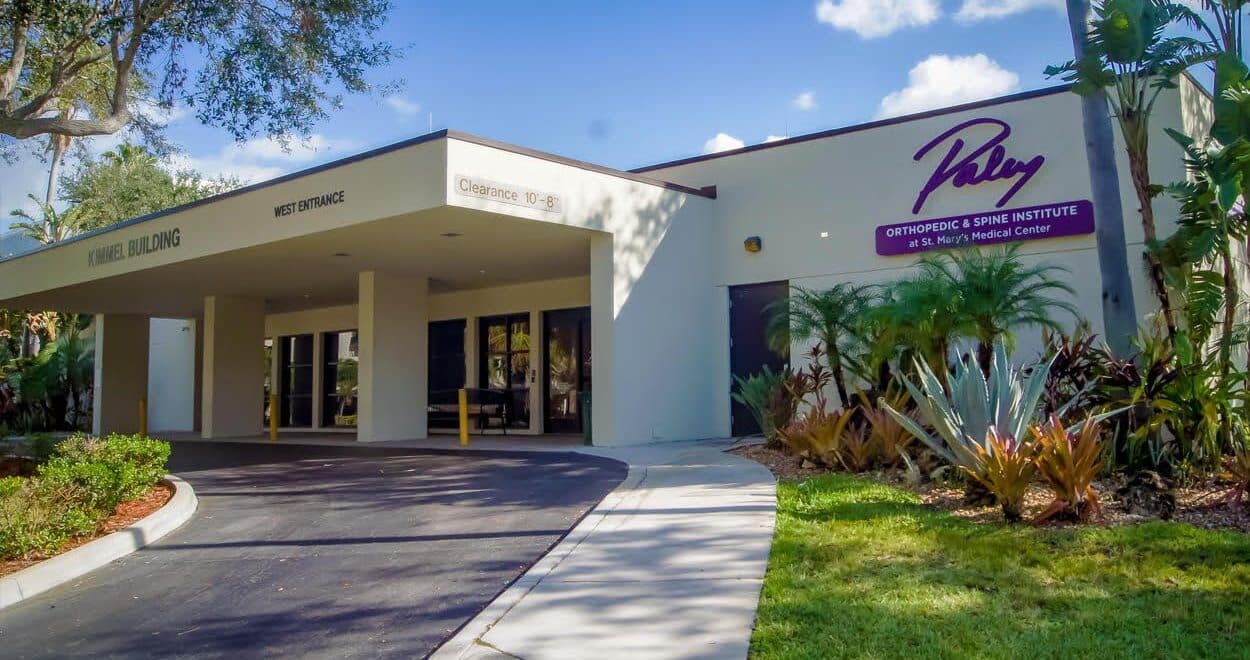
Paley Orthopedic & Spine Institute
Dr. Dror Paley, MD, FRCSC

LimbplastX Institute
Dr. Kevin Debiparshad, MD, FRCSC

Height Lengthening
Dr. Shahab Mahboubian, DO, MPH

AFA Limb Lengthening
Dr. Mustafa Uysal, MD, Prof. Dr.

Esencan International Hospital
Dr. Yüksel Yurttaş, MD, Prof. Dr.
International Clinics
Dr. Humam Baki, MD
Browse every leg lengthening surgeon in the directory or, if you are new to all of this, start with what height surgery actually involves. For the complication record of this method family, read PRECICE nail complications — rates by class.
Frequently asked questions
Is PRECICE Max the same as PRECICE Stryde?
No. Stryde was stainless steel and was withdrawn in 2021 after corrosion and bone changes at its telescoping junction. The Max is titanium alloy (Ti-6Al-4V ELI per the 510(k) summary) and is the thicker successor within the titanium line. It targets the same patient Stryde targeted, one who wants to bear more weight, but does so with a bigger titanium nail rather than a harder steel, and it has not been in patients long enough for anyone to say how that plays out over years.
Was PRECICE Max recalled?
Yes. The FDA database shows a Class 2 recall initiated on 30 September 2024 (Z-0500-2025) for potential issues with design, manufacturing and validation documentation. It covered 164 devices distributed in Florida and Nevada. Customers were told to monitor patients, stop using unimplanted nails and return stock to Globus Medical. The record was still listed as open when we checked in September 2026. If you had a Max implanted in 2024, ask your clinic whether your nail's lot was included.
Can I put full weight on a PRECICE Max leg?
The manufacturer's product page does not publish a weight-bearing limit; it publishes strength multipliers against PRECICE 2 from bench testing. The surgeon who performed the first implantation said in a press release that the nail would allow full weight-bearing through lengthening and consolidation. Treat that as a claim to be confirmed against the IFU your clinic uses. Ask for the weight-bearing protocol in writing, by nail diameter, and ask what happens to the plan if the X-rays lag.
Is there any published outcome data on PRECICE Max?
Not that we could find. A PubMed search in September 2026 returned no clinical series on the Max; the single hit was a Stryde paper. The manufacturer's 2.6-fold bending-strength and 1.3-fold rotational-stability claims are footnoted as mechanical testing data on file. The nearest evidence is the class data on PRECICE and FITBONE nails, such as the 983-segment systematic review, which describes the risks of the method rather than of this implant.
How is the Max different from PRECICE 2 for a patient?
Same magnet, same controller, same daily sessions, and the same one-year removal reminder the FDA gives for the titanium PRECICE family. The difference is a thicker nail (10, 11.5 or 13 mm) with bigger screws and larger distal screw holes, which the maker says makes it stronger in bending and rotation. That may mean a more permissive weight-bearing plan, but the plan comes from your surgeon, not from a published label limit. The trade-off: PRECICE 2 has years of published data and the Max has none.
Is PRECICE Max available outside the United States?
We could not verify it. The only distribution data we have is the FDA recall record from 2024, which lists US distribution to Florida and Nevada, and our searches found no UK or EU regulator statement on the Max. A clinic in Turkey, Germany or elsewhere quoting the Max should be able to state the device's regulatory status in that country and show the packaging. If it cannot, assume you are being quoted a different PRECICE nail.
How much does PRECICE Max cost?
It sits at the top of the internal-nail band. The one US clinic that itemises it publishes $100,000 for bilateral femur and $110,000 for bilateral tibia lengthening with PRECICE Max (LimbplastX, 2026 price list), against $84,000 for PRECICE 2 on the same list. Outside the US only a few clinics offer it and most quote on request; the live range from every clinic that publishes a price is shown on this page and in the cost estimator.
Reading on PRECICE Max
- Limb lengthening process step by step: 11 stages, with timings
See the limb lengthening process step by step: candidacy, imaging, the osteotomy, 5–7 day latency, 1 mm/day distraction, consolidation and nail removal.
- What limb lengthening Reddit threads say, and where the data disagrees
We read 34 limb lengthening Reddit threads and set each patient theme (pain, regret, physio, cost, Turkey) beside the published data. See where they disagree.
- Limb lengthening statistics 2026, measured from 192 verified clinics
Limb lengthening statistics 2026: 192 verified clinics in 38 countries, methods in use, and published price bands by country and method. Download the dataset.
- PRECICE nail complications: every risk class with its published rate
PRECICE nail complications: device failure 12–32% of segments, contracture 16%, deep infection 0.5–3%, the Stryde recall, removal surgery. See each rate with n.
- The PRECICE nail, explained: magnet, sizes, removal and cost by country
PRECICE nail explained: magnet-driven titanium lengthening rod. See sizes, weight limits, the one-year removal rule, the Stryde recall and prices by country.
- Femur vs tibia: which bone gets lengthened first?
Femur first is standard for most patients pursuing cosmetic limb lengthening. Why surgeons pick the thigh bone, when the calf wins, and the two-stage gap.
- How much taller can you actually get from limb lengthening surgery?
Realistic gain per surgery is 6-8 cm in the femur, 5-7 cm in the tibia. Two-stage patients reach 13-16 cm. Numbers, methods, and the 10-inch myth.
- Is limb lengthening surgery safe in 2026?
Limb lengthening runs a 30-45% any-complication and 5-15% serious rate across published cosmetic series. Safety is more surgeon-dependent than method choice.
- Can things go wrong years after limb lengthening surgery?
Late limb lengthening complications: refracture, nerve pain, joint stiffness. Most correlate with early-recovery shortcuts, not the surgery itself.
- Is there an age limit for limb lengthening? Honest numbers for 18 to 60.
Typical age window for cosmetic limb lengthening is 18-45. Growth plates must be closed. Bone healing slows after 35. There is no absolute upper limit.
- How much does limb lengthening surgery cost in 2026?
Limb lengthening costs $3,158 in India and up to $313,000 in the US. See country-by-country prices from 43 priced clinics of 192, re-checked September 2026.
- Hidden costs after limb lengthening surgery: the 10-item checklist
Implant removal, lost wages, physio, complications. The 10 expenses the headline price hides. Real numbers from the 43 priced clinics of 192 in our directory.
- Does health insurance cover limb lengthening surgery?
Cosmetic limb lengthening: never covered. Congenital LLD or trauma: often covered in EU/UK/some US plans. Country-by-country rules with CPT codes.
- Will scars be visible after limb lengthening? A method-by-method honest answer.
PRECICE leaves 2 small linear scars per leg. LON adds 6-10 pin-site dots. Ilizarov leaves 8-16 pin marks. Healing timelines, fade, and what to ask.
- The PRECICE Stryde recall, explained — and what it means in 2026
FDA Class II recall of the PRECICE Stryde nail (February 2021). Timeline, why it happened, monitoring protocol, and 5 questions to ask any clinic.
- FDA 510(k) Summary K232267: Precice Max System, NuVasive Specialized Orthopedics (decision December 15, 2023)
- Globus Medical: Precice Max Intramedullary Limb Lengthening System product page
- FDA Medical Device Recalls database: Precice Max, recall number Z-0500-2025 (Class 2; initiated September 30, 2024; 164 devices; status open)
- Paley Orthopedic & Spine Institute press release via PRWeb (February 20, 2024): first surgery with the PRECICE Max System scheduled for February 27, 2024
- FDA: Update on NuVasive Specialized Orthopedics' Precice Devices, Letter to Health Care Providers (June 28, 2023)
- Frost MW, Rahbek O, Traerup J, Ceccotti AA, Kold S. Systematic review of complications with externally controlled motorized intramedullary bone lengthening nails (FITBONE and PRECICE) in 983 segments. Acta Orthop 2021;92(1):120-127 (PMC7919879)
This page is editorial reporting, not medical advice. Every patient anatomy is different — technique selection requires in-person consultation with a qualified surgeon.