
PRECICE 2
PRECICE 2 Intramedullary Lengthening Nail
Magnetically-driven internal nail — the current global standard for cosmetic and reconstructive lengthening.
PRECICE 2 is a titanium lengthening nail implanted inside the femur or tibia and driven by a hand-held magnet unit, so nothing crosses the skin. It suits adults who need up to 80 mm of new length, weigh under the labelled limit for their nail size, and can accept partial weight-bearing for months.
How it works
PRECICE 2 is a titanium intramedullary nail that is surgically placed inside the femur or tibia. An external remote control unit (ERC) magnetically activates an internal motor to gradually distract the bone — typically 1 mm per day, split across 3–4 sessions. Because nothing is external, infection and pin-care burden are dramatically lower than frame-based techniques.
Schematic. Bone geometry and hardware placement are illustrative; consult your surgeon for procedure specifics.
How the nail works, and what you do every day
The implant is a telescoping tube of Ti-6Al-4V titanium with a small magnet and a gear train sealed inside. The surgeon cuts the bone through a short incision, slides the nail down the marrow canal, and locks both ends with screws. From then on the work happens outside. You press the External Remote Controller (ERC) against the thigh or shin over the internal magnet; its spinning magnet turns the implant's magnet, the gears turn, and the nail extends by a fraction of a millimetre. The manufacturer's instructions for use (IFU, LC0305 Rev D, March 2023) allow the same unit to shorten the nail, but only in the surgeon's hands.
The usual prescription is 1 mm a day. The International Center for Limb Lengthening in Baltimore splits that into four sessions of 0.25 mm, each about two minutes with the ERC. You do the sessions at home, log them, and return for X-rays. If the regenerate looks thin or a nerve complains, the rate is slowed. That is the whole daily routine: a few minutes with a hand-held box, for as many days as you have millimetres to gain.
Who it suits, and who it does not
The label (IFU, 2023) covers limb lengthening, fracture fixation, non-unions and bone transport in patients 18 and older, plus femur and tibia lengthening in children over 12. It does not separate cosmetic from reconstructive use; that call is the surgeon's. Body weight is a hard limit: the IFU caps patients at 57 kg for the 8.5 mm nail and 114 kg for the 10.7, 11.5 and 12.5 mm nails. The FDA's June 2023 letter adds: no patient under 50 lb, and no more than two nails at once.
The bone canal has to accept the nail, so the surgeon measures it on X-ray first; an irregular canal is a listed contraindication. So are active bone infection, bone too weak to hold screws, pre-existing nerve palsy, metal allergy, pregnancy, poor blood supply to the limb, and any patient unwilling to follow the after-care. The IFU does not recommend the system for people with pacemakers, and the implant is MR Unsafe: you must not go near an MRI scanner while it is in. The ERC also has to reach the magnet through soft tissue, so the IFU sets maximum skin-to-canal distances per nail.
The lengthening protocol: rate, total gain, removal
After a short latency set by the surgeon, distraction runs at about 1 mm a day. Globus Medical's product page gives the nail's ceiling as 80 mm of distraction osteogenesis, so 6 cm is roughly two months of daily sessions. Most cosmetic femur plans sit in the 5 to 8 cm band, inside that ceiling. Then comes consolidation, when the nail acts as an internal splint while the new bone hardens; the surgeon calls it finished on X-ray, not on a calendar.
Weight-bearing is where PRECICE 2 asks the most of you. The IFU warns that the nail "cannot withstand the stresses of full weight bearing" in the femur or tibia, and its precautions rule out contact sports and other high-risk activities that load more than 20% of body weight onto the treated leg during distraction. Crutches or a walker are part of the plan. Removal is not optional: the IFU says the device should be removed after an implantation time of no more than one year, and the FDA repeated that reminder in June 2023. Budget for a second operation with its own recovery.
Risks specific to a magnet nail
The IFU's own adverse-event list is a fair place to start: loss of distraction or uncontrolled lengthening, failure to lengthen, implant bending or fracture, loosening, joint stiffness or subluxation, and local reactions to titanium wear debris. The published numbers come from mixed FITBONE and PRECICE cohorts. A 2023 Acta Orthopaedica study of 314 nails (80 of them PRECICE) found that 53% of patients had at least one complication; device-related events were the most frequent cause but "did not result in any type IIIA or IIIB complications", meaning none left permanent harm. Tibial nails carried 70% more risk than femoral ones, patients over 30 roughly double the risk, and a short-stature indication raised it by 80%.
The 2021 systematic review of 983 segments (747 PRECICE) reported complications in 34% of segments, 5% failing to reach the goal and 3% with permanent sequelae; distraction-mechanism failure, joint contracture and delayed healing each ran at about 5%. On biocompatibility, the FDA said in June 2023 that it was not aware of adverse events tied to biocompatibility in titanium PRECICE devices, and that it continues to monitor.
Where it sits on price, and what moves it
PRECICE 2 sits above frame-based methods and above LON on implant cost. The reasons are structural, not branding. Each nail is single-use and one bone needs one nail, so a bilateral case means two implants plus the ERC. Removal is a second surgery with its own theatre time, and the label's one-year clock means you cannot postpone it indefinitely. What it saves is pin care: there is no external frame to dress and no pin sites to infect.
Across clinics the spread comes from the country's hospital overhead, the surgeon's fee, and what the package leaves out. Ask whether the quoted figure includes the implants, the ERC, follow-up imaging, physiotherapy beyond the first weeks, and the removal operation. A low headline number that excludes removal is not a low number.
How to read a clinic that offers PRECICE 2
Questions worth asking before a deposit. Which nail diameter am I getting, and where does my weight sit against the IFU table? What is your weight-bearing protocol during distraction, and does it match the label? When do you remove the nail, and who does it? How do you screen for pacemakers and future MRI needs? Who trains me on the ERC, and what happens if the nail stops lengthening? How many PRECICE cases have you done, and how do you grade complications?
Red flags: a promise of full weight-bearing on a PRECICE 2 from day one, which contradicts the manufacturer's warning; a suggestion the nail can stay in for years; offering the device outside the labelled ages; quoting a Stryde-era weight allowance for a titanium nail; and booking surgery without measuring your canal on X-ray. A clinic that answers with the IFU in hand is a better sign than one that answers with a brochure.
At a glance
- Typical gain
- 5–8 cm
- Total recovery
- 12–24 weeks
- Distraction sites
- femur, tibia
- External hardware
- No
- Manufacturer
- NuVasive Specialized Orthopedics (Globus Medical, since Sept 2023)
- Status
- Actively used
What this means for a patient
- ●No external hardware — no pin site infections
- ●Precise, controllable distraction via ERC
- ●Faster return to daily activity than frame methods
- ●Generally better cosmetic outcome
Trade-offs and risks
- ●Weight-bearing restrictions during distraction phase
- ●Higher implant cost than older techniques
- ●Requires a second surgery for implant removal — the IFU sets no more than one year after implantation
91 verified clinics offering PRECICE 2
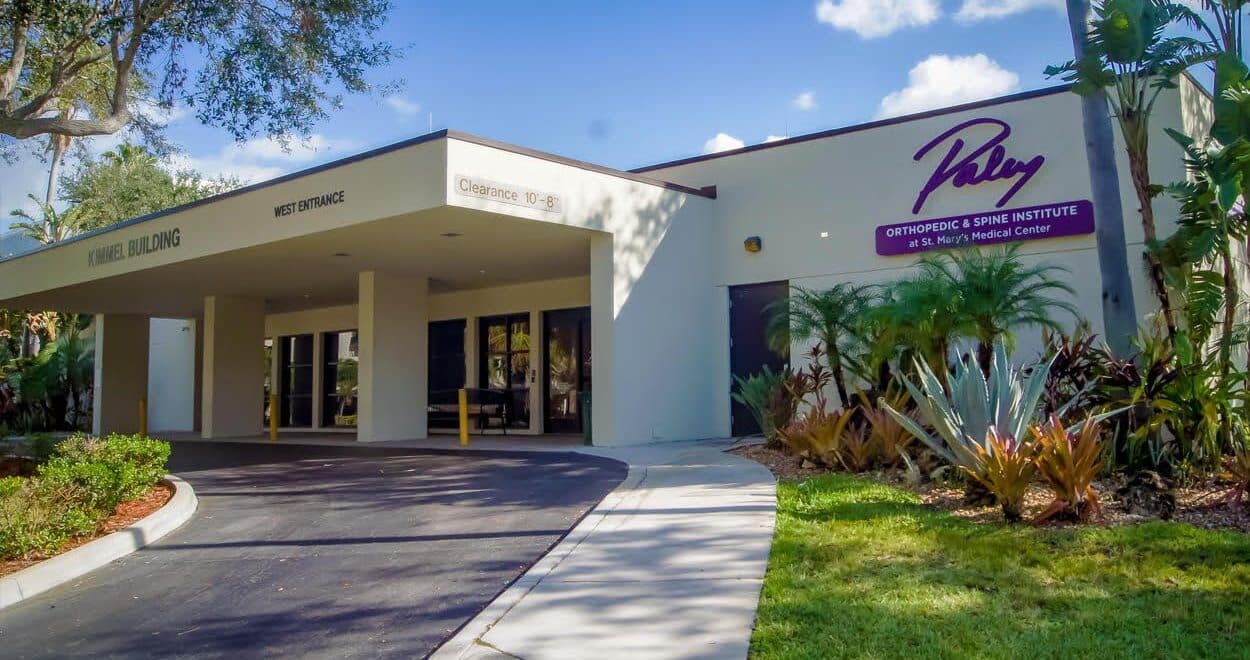
Paley Orthopedic & Spine Institute
Dr. Dror Paley, MD, FRCSC

Hospital for Special Surgery
Dr. Austin Fragomen, MD

Rubin Institute for Advanced Orthopedics
Dr. Philip K. McClure, MD

LimbplastX Institute
Dr. Kevin Debiparshad, MD, FRCSC

Height Lengthening
Dr. Shahab Mahboubian, DO, MPH

Wanna Be Taller
Dr. Yunus Öç, MD, Assoc. Prof.
Browse every leg lengthening surgeon in the directory or, if you are new to all of this, start with what height surgery actually involves. For the complication record of this method family, read PRECICE nail complications — rates by class.
Frequently asked questions
Can I have an MRI with a PRECICE 2 nail in my leg?
No. The manufacturer's instructions class the PRECICE system as MR Unsafe: a patient with the nail implanted must not come near an MRI scanner and must not undergo a scan. The magnet inside the nail is the reason. If you have a condition likely to need MRI during the next year, raise it before surgery. CT and X-ray remain available, and MRI becomes possible again once the nail has been removed.
How long does a PRECICE 2 nail stay in?
The IFU says the device should be removed after an implantation time of no more than one year, and the FDA's June 2023 letter to surgeons repeats that the device should be removed after one year. In practice the surgeon schedules removal once the new bone has consolidated, inside that limit. Removal is a separate operation, so ask who performs it and whether it is included in your quote.
Is PRECICE 2 the same device as PRECICE Stryde?
No. Both are magnet-driven PRECICE nails, but Stryde was made from stainless steel and was withdrawn in 2021 after reports of pain and bone changes at its telescoping junction; the FDA says the stainless-steel PRECICE devices remain recalled and should not be implanted. PRECICE 2 is titanium and is not part of that recall. The FDA stated in June 2023 that it was not aware of biocompatibility-related adverse events with the titanium devices.
Can I walk after PRECICE 2 surgery?
With support, yes; on your own weight, no. The label says the nail cannot withstand full weight-bearing in the femur or tibia, and during distraction it rules out contact sports and other high-risk activities that load more than 20% of your body weight onto the treated leg. Your surgeon sets the exact allowance and raises it as the regenerate hardens. Expect crutches or a walker through lengthening and into consolidation.
Is PRECICE 2 cleared for cosmetic height surgery?
The US label covers limb lengthening in patients 18 and older, and femur or tibia lengthening in children over 12. It does not say why the limb is being lengthened, so cosmetic use falls under the same indication as reconstructive use. That puts the decision about whether you are a reasonable candidate on the surgeon, not the regulator, which is one more reason to ask how the clinic selects and declines patients.
What if the nail stops lengthening?
Failure to lengthen and loss of distraction are both on the manufacturer's adverse-event list, and the 983-segment systematic review found distraction-mechanism failure in about 5% of segments. The first check is ERC alignment over the magnet; the second is an X-ray. If the mechanism has failed, options range from exchanging the nail to finishing with the length you have. Ask the clinic in advance what its plan is, because this is not rare enough to ignore.
Reading on PRECICE 2
- Do you ever fully recover from limb lengthening? What comes back and what stays
Do you ever fully recover from limb lengthening? Walking at 4–6 months, running at 9–12, strength by year 2. See what stays: stiffness, scars, nail removal.
- Limb lengthening process step by step: 11 stages, with timings
See the limb lengthening process step by step: candidacy, imaging, the osteotomy, 5–7 day latency, 1 mm/day distraction, consolidation and nail removal.
- What limb lengthening Reddit threads say, and where the data disagrees
We read 34 limb lengthening Reddit threads and set each patient theme (pain, regret, physio, cost, Turkey) beside the published data. See where they disagree.
- Limb lengthening statistics 2026, measured from 192 verified clinics
Limb lengthening statistics 2026: 192 verified clinics in 38 countries, methods in use, and published price bands by country and method. Download the dataset.
- Limb lengthening success rate: four definitions, four different numbers
No single limb lengthening success rate exists: 95% of segments reach the planned length, 34–53% have a complication, 3% keep lasting harm. See each definition.
- LON method complications: what nine patient series report
LON method complications: deep infection 0–20% of limbs, pin-site infection 16–33%, two operations, joint stiffness. See which risks are LON-specific and why.
- LON limb lengthening in Turkey: why clinics use it, what to verify
LON limb lengthening in Turkey: how the nail-plus-frame method works, clinic-published prices from $26,400, deep-infection data, and what to verify first.
- Medical tourism for orthopedic surgery: how to vet a clinic abroad before you pay a deposit
Medical tourism orthopedic surgery checklist: verify JCI status, the surgeon's case volume, implant recalls, follow-up at home, and what a quote must include.
- PRECICE nail complications: every risk class with its published rate
PRECICE nail complications: device failure 12–32% of segments, contracture 16%, deep infection 0.5–3%, the Stryde recall, removal surgery. See each rate with n.
- The PRECICE nail, explained: magnet, sizes, removal and cost by country
PRECICE nail explained: magnet-driven titanium lengthening rod. See sizes, weight limits, the one-year removal rule, the Stryde recall and prices by country.
- Surgery to make men taller: what it adds and who should skip it
Surgery to make men taller adds 5–8 cm per stage and costs $16,000–$313,000 by country. See real numbers on pain, complications, time off and who should not.
- Which celebrity had limb lengthening surgery? Every confirmed celebrity limb lengthening case, with sources
Celebrity limb lengthening, confirmed only: see actor Rich Rotella, Theresia Fischer, Yeferson Cossio and five on-record patients, all sourced. Rumors excluded.
- Do surgeons really break your legs to get taller?
Do surgeons break your legs to get taller? No, not like a fracture. Here is what really happens: a controlled cut, 1 mm a day, and new bone that grows to fill the gap.
- Height Surgery (Limb Lengthening): The Complete, Honest 2026 Guide
A sourced, no-hype guide to limb lengthening: do you really need it, the psychology to settle first, methods, costs, risks, and choosing a clinic.
- How painful is limb lengthening surgery? An honest, phase-by-phase answer
Limb lengthening surgery is painful but managed and phased, not constant. The real pain timeline — surgery, distraction, physiotherapy, and nerve pain — explained.
- Is limb lengthening worth it? The decision, weighed honestly
Is limb lengthening worth it? A permanent 6–7 cm gain and the self-esteem that comes with it, set against a painful year-plus of recovery, real surgical risk and a bill you pay yourself. What patients say afterwards.
- Is Turkey safe for limb lengthening? What actually determines the risk
Turkey can be safe for limb lengthening — but the country isn't the variable, the clinic is. The real risks, the aftercare problem, and the checklist to verify a clinic.
- Limb lengthening before and after: what realistic results actually look like
What limb lengthening before and after really looks like — realistic height gain, how proportions change, and why most clinic before-and-after photos are marketing.
- Where is limb lengthening surgery cheapest? Five countries, ranked.
See Russia, India, Iran, Egypt and Turkey ranked by published floor price, plus what each floor leaves out. Cheapest is not safest. 43 priced clinics of 192.
- Femur vs tibia: which bone gets lengthened first?
Femur first is standard for most patients pursuing cosmetic limb lengthening. Why surgeons pick the thigh bone, when the calf wins, and the two-stage gap.
- How much taller can you actually get from limb lengthening surgery?
Realistic gain per surgery is 6-8 cm in the femur, 5-7 cm in the tibia. Two-stage patients reach 13-16 cm. Numbers, methods, and the 10-inch myth.
- Is limb lengthening surgery safe in 2026?
Limb lengthening runs a 30-45% any-complication and 5-15% serious rate across published cosmetic series. Safety is more surgeon-dependent than method choice.
- Can things go wrong years after limb lengthening surgery?
Late limb lengthening complications: refracture, nerve pain, joint stiffness. Most correlate with early-recovery shortcuts, not the surgery itself.
- Is there an age limit for limb lengthening? Honest numbers for 18 to 60.
Typical age window for cosmetic limb lengthening is 18-45. Growth plates must be closed. Bone healing slows after 35. There is no absolute upper limit.
- How much does limb lengthening surgery cost in 2026?
Limb lengthening costs $3,158 in India and up to $313,000 in the US. See country-by-country prices from 43 priced clinics of 192, re-checked September 2026.
- Hidden costs after limb lengthening surgery: the 10-item checklist
Implant removal, lost wages, physio, complications. The 10 expenses the headline price hides. Real numbers from the 43 priced clinics of 192 in our directory.
- Does health insurance cover limb lengthening surgery?
Cosmetic limb lengthening: never covered. Congenital LLD or trauma: often covered in EU/UK/some US plans. Country-by-country rules with CPT codes.
- Limb lengthening physiotherapy — what it covers and why skipping it costs you range of motion
Yes, daily. 60–90 minutes a day for 9–12 months. Patients who skip lose joint range of motion permanently. Full PT protocol and clinic bundling guide.
- Limb lengthening recovery timeline — the real 9 to 18 month roadmap
Full recovery from limb lengthening is 9–18 months across three phases. Month-by-month timeline, method differences, and the biology behind the wait.
- Will scars be visible after limb lengthening? A method-by-method honest answer.
PRECICE leaves 2 small linear scars per leg. LON adds 6-10 pin-site dots. Ilizarov leaves 8-16 pin marks. Healing timelines, fade, and what to ask.
- The PRECICE Stryde recall, explained — and what it means in 2026
FDA Class II recall of the PRECICE Stryde nail (February 2021). Timeline, why it happened, monitoring protocol, and 5 questions to ask any clinic.
- When can you walk after limb lengthening surgery — week by week
Crutches within days, partial weight-bearing at 10–16 weeks, unaided walking at 4–6 months, running at 9–12 months — a week-by-week walking timeline.
- NuVasive Specialized Orthopedics: PRECICE Intramedullary Limb Lengthening System, Instructions for Use (LC0305 Rev D, March 2023)
- Globus Medical: Precice Limb Lengthening System product page
- FDA: Update on NuVasive Specialized Orthopedics' Precice Devices, Letter to Health Care Providers (June 28, 2023)
- Frost MW, Rahbek O, Iobst C, Bafor A, Duncan M, Kold S. Complications and risk factors of intramedullary bone lengthening nails: a retrospective multicenter cohort study of 314 FITBONE and PRECICE nails. Acta Orthop 2023;94:51-59 (PMC9940487)
- Frost MW, Rahbek O, Traerup J, Ceccotti AA, Kold S. Systematic review of complications with externally controlled motorized intramedullary bone lengthening nails (FITBONE and PRECICE) in 983 segments. Acta Orthop 2021;92(1):120-127 (PMC7919879)
- International Center for Limb Lengthening, Sinai Hospital of Baltimore: Internal Fixation: Precice Nail (patient information)
This page is editorial reporting, not medical advice. Every patient anatomy is different — technique selection requires in-person consultation with a qualified surgeon.