
LATN
Lengthening And Then Nailing
External fixator drives the distraction phase; once length is achieved, an internal nail is inserted and the frame removed.
LATN (lengthening and then nailing) is a two-stage hybrid method. An external frame does all the lengthening alone; once target length is reached, a second operation inserts an intramedullary nail and removes the frame, so the new bone hardens around the nail. It suits patients who want less frame time than Ilizarov without a nail in the canal during distraction.
How it works
LATN is a variant of LON. The external fixator is used only during the distraction phase; at the end, the patient returns to theatre, an intramedullary nail is placed, and the external frame is removed. Consolidation then occurs with the internal nail providing stability.
Schematic. Bone geometry and hardware placement are illustrative; consult your surgeon for procedure specifics.
How does lengthening and then nailing work?
The order is the whole point. In LON the nail goes in first and the frame lengthens over it. In LATN the frame goes on first, alone, and lengthens the bone with nothing inside the canal. Only when distraction is finished does the patient return to theatre: the surgeon reams the canal, passes a locked intramedullary nail across the soft new bone, and takes the frame off in the same sitting. The nail then carries the bone through consolidation.
S. Robert Rozbruch's group at the Hospital for Special Surgery in New York described the technique in 2008, in 39 limbs (35 tibiae, 4 femora) in 27 patients treated between 2001 and 2006. The frame is built from the start so a nail can be inserted later without contact between the nail and the pins or wires. Against matched classic Ilizarov cases, LATN patients wore the frame for 12 weeks instead of 29, with an external fixation index of 0.5 months per centimetre against 1.9, and the bone healed faster (bone healing index 0.8 versus 1.9).
Who is LATN for?
LATN was designed as a reconstructive tool and is used that way most of the time. Rozbruch's original series mixed malunions, nonunions, congenital shortening and growth arrest with 12 bilateral cases done for short stature or deformity. It fits the patient whose bone needs both length and alignment work, because the frame can be adjusted during distraction and the nail only goes in once the surgeon is satisfied with the axis.
In pure cosmetic lengthening it is a minority choice. In the Marwan 2020 systematic review of 795 cosmetic patients, 95 were lengthened and then nailed, drawn from two series; classic Ilizarov and LON each accounted for more than 250. That column showed the largest mean gain (7.6 cm) and the shortest external fixation index (11.4 days per centimetre) of any frame-based technique, but also the highest mean complication count per patient (0.6). None of the between-technique differences were statistically significant, and the review does not explain the complication figure. Treat the LATN evidence base as thin, not as proof either way.
What does the LATN protocol look like?
Stage one looks like Ilizarov: a corticotomy, a ring frame, a short latency, then distraction at around 1 mm a day in several turns while you clean pin sites daily. Typical gains are 5–8 cm; Rozbruch's LATN cases averaged 5.4 cm (range 1.5–10). Stage two is scheduled as soon as length is reached; in the HSS protocol it is postponed if a pin site is actively infected, because operating through an infected tract invites deep infection.
At stage two the canal is reamed, the nail is locked, the frame is removed and the pin sites are left open to drain. From then on there are no pins to clean. The bone still needs months to consolidate on the nail, which is why the recovery window for LATN runs to 16–28 weeks on this page, the same as LON. The nail is generally removed in a later, smaller operation. Expect three theatre visits in total, plus the physiotherapy that any lengthening demands.
What are the risks of LATN?
During stage one the risks are the frame's: pin-site infection, which is described as almost universal in some form with external fixation, plus nerve irritation, joint stiffness and ankle equinus. The Cochrane review of pin-site care found no cleaning regimen that clearly cuts infection, so what matters is that someone checks the sites daily and acts early.
Stage two adds its own. A reamed nail is passed through bone that has carried pins for weeks, and a contaminated tract can seed the canal. In Rozbruch's 39 limbs, one patient had a deep infection after the bone had healed; it was treated by removing the nail and six weeks of intravenous antibiotics. One femoral patient had a sciatic nerve palsy that resolved on its own, and two patients needed a repeat fibular osteotomy because the fibula fused too early. A second anaesthetic, a second recovery and a second bill are part of the method rather than complications, but plan for them.
The refracture risk that follows Ilizarov frame removal is largely removed, because the nail stays in.
Where does LATN sit on cost?
On hardware, LATN uses a ring frame and a standard locked nail, so its implant cost is well below a motorised magnetic nail and roughly in line with LON. What pushes it up is theatre time: two full operations instead of one, each with anaesthesia and a hospital stay, plus the later nail removal. Whether that lands above or below a LON quote depends on how the clinic prices the second procedure.
Read every LATN quote for that line. Some packages bundle both stages, physiotherapy and nail removal; others quote stage one and treat stage two as a separate admission. A travelling patient also pays for the interval between stages, either as a longer stay or as a second trip.
This page carries no prices on purpose. The cost guide and each clinic listing do, and they are maintained separately.
How to read a clinic that offers LATN
First, confirm they mean LATN. Some clinics use the term loosely for what is really lengthening over a nail. Ask directly: does the nail go in before distraction or after? Then ask why they prefer this sequence for you; the credible answers are alignment work during distraction, or a policy of keeping pins and nail apart.
Second, ask about stage two. Who performs it, when, and what happens if a pin site is infected on the day. A clinic that says it operates anyway is ignoring the protocol the technique was published with. Ask how many LATN cases the lead surgeon does a year and how many deep infections that has produced.
Third, ask about your time. Frame weeks, the interval between stages, the total stay if you are travelling, and who manages pin sites if you go home with the frame on. Clinic profiles here list which methods each centre performs; a centre that offers Ilizarov, LON, LATN and internal nails can choose between them, which is what you want.
At a glance
- Typical gain
- 5–8 cm
- Total recovery
- 16–28 weeks
- Distraction sites
- femur, tibia
- External hardware
- Yes
- Status
- Actively used
What this means for a patient
- ●Lower cost than fully-internal techniques
- ●Fixator time limited to distraction phase
Trade-offs and risks
- ●Two full operations — frame application, then nailing with frame removal in one sitting — plus later nail removal
- ●Pin site care during distraction
15 verified clinics offering LATN
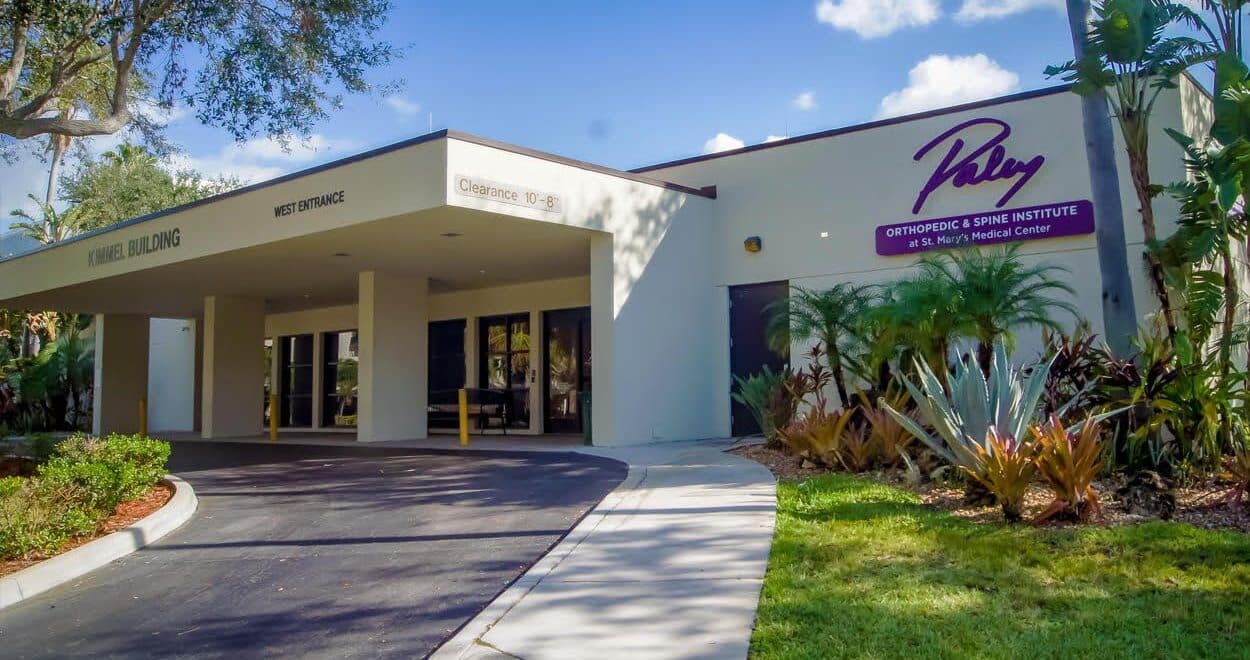
Paley Orthopedic & Spine Institute
Dr. Dror Paley, MD, FRCSC

Hospital for Special Surgery
Dr. Austin Fragomen, MD

LimbplastX Institute
Dr. Kevin Debiparshad, MD, FRCSC

Center of Anthropometric
Dr. Alexander Sergeyevich Barinov, Candidate of Medical Sciences (k.m.n.); 90+ scientific publications; 10 patents; dissertation 2003 on topographic-anatomical justification of operative height increase; Senior Researcher, Volgograd Scientific Center of the Russian Academy of Sciences
Height Increase Info
Dr. Vikram Khanna, MBBS, D.Orth, DNB, MNAMS

Donghoon Advanced Lengthening Reconstruction Institute
Dr. Donghoon Lee, MD, PhD (Yonsei University)
Browse every leg lengthening surgeon in the directory or, if you are new to all of this, start with what height surgery actually involves. For the complication record of this method family, read LON complications — the hybrid compared.
Frequently asked questions
What is the difference between LATN and LON?
Sequence. In LON the intramedullary nail is inserted at the first operation and the frame lengthens the bone over it; the frame comes off when distraction ends. In LATN the frame lengthens the bone alone, and the nail is inserted at a second operation when length is reached, at which point the frame is removed. LATN keeps metal out of the canal during distraction; LON avoids a second full operation. Both keep the frame on for weeks rather than months.
How many operations does LATN involve?
Three in the normal course. The first applies the frame and cuts the bone. The second, once length is reached, reams the canal, inserts and locks the nail and removes the frame. The third, months later once the bone is solid, removes the nail. Minor procedures can be added along the way, such as a repeat fibular osteotomy, which two patients needed in Rozbruch's original series. Ask which of the three operations are in the quote.
How long is the frame on with LATN?
In Rozbruch's 2008 series LATN patients wore the frame for 12 weeks against 29 weeks for matched classic Ilizarov cases, at a mean gain of 5.4 cm. In the Marwan 2020 review the LATN column had the shortest external fixation index of any frame technique, 11.4 days per centimetre, which puts a 6 cm lengthening at roughly 10 weeks. Your figure depends on your distraction rate, your gain and how promptly stage two is scheduled.
Is LATN safer than LON?
Nobody has shown that in a head-to-head trial of cosmetic patients. The argument for LATN is that no nail sits in the canal while the pins are in, so a pin-site infection has nothing to track onto. The argument against is a second anaesthetic and reaming through bone that has carried pins. In the Marwan review LATN recorded more complications per patient than LON (0.6 versus 0.1), but the difference was not statistically significant and the LATN data came from two series. Treat it as unsettled.
Can LATN correct a deformity while lengthening?
Yes, and that is its main reconstructive use. During stage one the frame lengthens and can be adjusted to correct angulation or rotation; the nail then holds the corrected, lengthened bone through consolidation. Rozbruch's original series included malunions, nonunions, congenital shortening and growth arrest alongside bilateral stature cases. A straight nail cannot correct a bend on its own, which is why LON is usually reserved for straight bones.
Is the nail removed after LATN?
Usually, in a separate operation once X-rays show the regenerate has fully consolidated, which is generally many months after stage two. Some surgeons leave a well-tolerated nail in place; policies vary and the decision is made case by case. Nail removal is a smaller procedure than either lengthening stage, but it is still an anaesthetic and a short recovery, so confirm whether it is included in the package and where it will be done.
Reading on LATN
- Limb lengthening success rate: four definitions, four different numbers
No single limb lengthening success rate exists: 95% of segments reach the planned length, 34–53% have a complication, 3% keep lasting harm. See each definition.
- LON method complications: what nine patient series report
LON method complications: deep infection 0–20% of limbs, pin-site infection 16–33%, two operations, joint stiffness. See which risks are LON-specific and why.
- Where is limb lengthening surgery cheapest? Five countries, ranked.
See Russia, India, Iran, Egypt and Turkey ranked by published floor price, plus what each floor leaves out. Cheapest is not safest. 43 priced clinics of 192.
- Rozbruch SR, Kleinman D, Fragomen AT, Ilizarov S. Limb lengthening and then insertion of an intramedullary nail: a case-matched comparison. Clin Orthop Relat Res 2008 (PMC2628243) — the original LATN series, Hospital for Special Surgery.
- Marwan Y et al. Cosmetic stature lengthening: systematic review of outcomes and complications. Bone & Joint Research 2020 (PMC7342054) — 795 patients, 11 studies.
- Paley D, Herzenberg JE, Paremain G, Bhave A. Femoral lengthening over an intramedullary nail: a matched-case comparison with Ilizarov femoral lengthening. J Bone Joint Surg Am 1997;79(10):1464-80 (PMID 9378732).
- Ferreira N, Marais LC. Prevention and management of external fixator pin track sepsis. Strategies Trauma Limb Reconstr 2012 (PMC3535127).
- Lethaby A, Temple J, Santy-Tomlinson J. Pin site care for preventing infections associated with external bone fixators and pins. Cochrane Database Syst Rev 2013 (PMC12042071) — 11 trials, 572 participants.
- Ilizarov GA. The tension-stress effect on the genesis and growth of tissues: Part II. The influence of the rate and frequency of distraction. Clin Orthop Relat Res 1989;239:263-85 (PMID 2912628).
This page is editorial reporting, not medical advice. Every patient anatomy is different — technique selection requires in-person consultation with a qualified surgeon.