
Correcting adult bow legs means an osteotomy (the tibia is cut and held with a plate or an external frame), done to protect the knee, not to add height. The measured gain after an opening-wedge osteotomy averages 4.3 mm. Real height comes only from lengthening the bone, a longer, riskier undertaking that can be combined with correction.
Straightening bow legs in adults does change your height — by millimetres, not inches. In the largest study to measure it directly, limb length after a medial opening-wedge osteotomy rose by an average of 4.3 mm, and a meta-analysis found the change was not even statistically significant on its own. If your goal is a straighter leg and a knee that lasts, correction is the operation. If your goal is height, correction alone will disappoint you — the gain comes from lengthening the bone, which is a different, longer, riskier undertaking that can be done in the same treatment.
What bow legs actually are in an adult
Bow legs — genu varum — means that when you stand with your feet together, your knees stay apart. In children it is usually a phase that resolves on its own. In an adult it is a fixed structural fact: the mechanical axis of the leg, the line running from the centre of the hip to the centre of the ankle, no longer passes through the middle of the knee. It passes inside it.
That displaced line is the whole clinical story. Load that should be shared across the knee gets concentrated on the medial compartment, the inner half of the joint. The cartilage there wears against a load it was not designed to carry alone, and the more the axis drifts, the faster that goes. This is why surgeons treat adult bow legs as a joint-preservation problem rather than a cosmetic one, and why the operation is usually argued for on the basis of the knee you will have at fifty rather than the legs you have now.
There is a second, quieter reason people arrive at this question. Bowing shortens you. The leg is taking a curved path between hip and ankle instead of a straight one, and a curve between two points is longer than the straight line it replaces. So a straightened leg does stand a little taller. The question is how much — and that is where almost everything written online is wrong.
Does straightening bowed legs make you taller?
Yes, and by less than you have been led to believe.
The best direct evidence comes from opening-wedge high tibial osteotomy, the standard adult correction, where the surgeon cuts the top of the tibia and wedges it open to swing the axis back to neutral. A 2023 series of 91 patients measured limb length before and after: the increase was statistically significant and averaged 4.3 mm, with a standard deviation of 2.86 mm. Four millimetres. Not four centimetres.
A 2017 meta-analysis pooling opening- and closing-wedge osteotomies is even more sobering. Neither technique produced a statistically significant change in leg length on its own; what was significant was the difference between them — about 8 mm, with opening wedge adding and closing wedge subtracting. In other words, the choice of technique matters more to your leg length than the correction itself does.
A few things follow from that. Correcting a mild bow will not be visible on a tape measure. Correcting a severe deformity does more, because there is more curve to straighten out, but you are still in the range of millimetres to perhaps a centimetre or so, not inches. And any claim that bow-leg correction alone delivers three inches of height is not a measurement — it is marketing, or a misremembered account of somebody who had lengthening as well.
| What was measured | Study | Result |
|---|---|---|
| Limb length after medial opening-wedge HTO (n = 91) | J Exp Orthop, 2023 | +4.3 mm on average (SD 2.86 mm); statistically significant |
| Leg length change, opening vs closing wedge (meta-analysis, 4 studies) | PLoS One, 2017 | Neither significant alone; 8 mm difference between the two techniques |
| Bone gained in cosmetic lengthening (systematic review, 795 patients) | Bone & Joint Research, 2020 | Mean 6.7 cm — a different operation, and a different order of magnitude |
Correction buys you millimetres. Lengthening buys you centimetres. Confusing the two is how people end up in the wrong operation.
What the surgeon measures before deciding anything
A photograph of your legs decides nothing. The decision is made on a long-standing radiograph — a single weight-bearing image that captures hip, knee and ankle together — because alignment is a property of the whole limb and cannot be judged from a knee film.
On that image the surgeon draws the mechanical axis from the centre of the femoral head to the centre of the ankle and measures how far it misses the middle of the knee. That distance, and the hip-knee-ankle angle it produces, is the number the operation is planned around. Two people with visually identical legs can need completely different operations depending on where the deformity sits: a bow originating in the femur is not corrected by cutting the tibia, and a bow that is partly rotational will look straight on the X-ray while still feeling wrong to walk on.
Two other things get measured at the same time, and both matter to anyone reading this for height reasons. The first is leg length — whether the two sides are already unequal, which changes whether a closing wedge (slightly shortening) is acceptable at all. The second is the state of the cartilage in the compartment being unloaded, because correction protects a joint that still has something left to protect; it does not rebuild one that is already gone.
If a clinic proposes correction without a long-standing radiograph, that is not a shortcut. It means the plan does not exist yet.
How adult bow legs are corrected
In a child whose growth plates are still open, alignment can be nudged with guided growth — a small plate that tethers one side of the plate and lets the other catch up. That door closes at skeletal maturity. In adults, the only way to change the shape of the bone is to cut it. The American Academy of Orthopaedic Surgeons puts it as plainly as it can be put: in skeletally mature adolescents and in adults, an osteotomy is the treatment.
The cut is usually made in the upper tibia, just below the knee, and the bone is then held in the corrected position while it heals. There are two families of hardware for that. A plate and screws fix the correction immediately, in a single operation, with nothing outside the skin — this is the common route for a moderate deformity in an otherwise healthy adult. An external frame holds the bone from outside and lets the surgeon adjust the correction gradually over weeks, which is what you want when the deformity is large, when it is in more than one plane, or when the bone needs to be lengthened as well as straightened.
Which you get is a technical decision, not a preference. Ask which one your surgeon is proposing and why, and ask specifically what happens to your leg length under each plan — a closing wedge, which removes a slice of bone, will shorten the leg slightly, which matters if the two sides are already unequal.
Correcting the axis and lengthening at the same time
If you want both — a straight leg and real height — those two goals can be pursued in a single treatment. A frame that can angulate while it distracts pulls the bone apart at about a millimetre a day while steering the axis back to neutral, so the new bone forms in the corrected position rather than being straightened afterwards.
The largest published account of doing this comes from Ghassan Salameh, an orthopaedic surgeon who designed the hinged arc fixator he operates with and reported his own series in International Orthopaedics in 2025: 1,103 lower-limb reconstructions performed between 2000 and 2024, of which 640 combined lengthening with deformity correction and 193 were stature lengthening in people without a deformity. Mean lengthening across the whole series was 5.6 cm, with a range of 2 to 18 cm, and a mean bone healing time of 260 days — roughly eight and a half months.
Read those numbers with the caveats attached, because they matter. It is a single-centre, retrospective series reported by the person who invented the device, and the complication figures it reports — 25 superficial pin-site infections, nine contractures and one deep infection across 1,103 patients — sit far below what the external-fixation literature usually describes. No independent team has reproduced them. That does not make the series worthless; it is, by some distance, the largest body of experience anyone has published on simultaneous correction and lengthening. It does mean you should treat the complication rate as the author's own reporting rather than as an established benchmark, and compare it against independent series before you build expectations on it.
The independent numbers are less comfortable. A 2014 study of 131 cosmetic Ilizarov patients reported complications in 37% of them. A 2020 systematic review across 795 cosmetic lengthening patients found a mean gain of 6.7 cm, and characterised problems and obstacles as common while serious major complications remained a smaller subset. Both are worth reading before you agree to wear a frame for eight months.
The largest series on simultaneous correction and lengthening was reported by the surgeon who designed the device. That is a reason to read it carefully, not a reason to ignore it.
What recovery actually looks like
For a plate-fixed correction, you are looking at a period of protected weight-bearing while the osteotomy consolidates, then progressive loading, with the hardware often left in place permanently. It is a real recovery, but it is measured in months and it does not dominate your life.
A frame is a different proposition. The hardware stays on until the new bone is strong enough to stand without it, and if you are lengthening as well as correcting, the healing clock does not start until distraction is finished. The Salameh series averaged 260 days to bone healing. That is most of a year of pin sites that need cleaning, sleep that gets interrupted, and physiotherapy that is not optional — the muscles and joints either keep up with the bone or they lose range you may not get back.
Our full recovery handbook covers the phases in detail; the short version is that the frame is the easy part to imagine and the hard part to live through.
The risks, stated honestly
Pin-site infection is the most common complication of any external frame, and the literature on it is messier than you would hope. Two systematic reviews looking at prevention concluded that studies use no consistent definition of what counts as an infection, which is precisely why quoted rates range from a few per cent to nearly universal depending on who is counting and how. One evaluation of 1,093 half-pins in an Ilizarov clinic found 3.1% infected at a single point in time. Series that follow patients through a whole treatment report far more. Assume you will deal with at least one pin site that needs antibiotics.
Beyond infection, the recognised risks of correction and lengthening include joint contracture, delayed or non-union of the bone, nerve and vessel irritation as tissues are stretched, hardware failure, and the loss of correction if the plan and the biology disagree. Fixed deformity correction with a plate is a smaller operation than lengthening and carries correspondingly lower risk — one of the honest arguments for separating the two goals rather than combining them.
None of this is a reason not to have the operation. It is a reason to have it for the right indication, with a surgeon who does it often, and with a written plan for what happens when something goes wrong.
What it costs, and who does this work
Cost splits along the same line as everything else on this page. A straightforward alignment correction is orthopaedic surgery, and in many health systems it is covered when there is a documented mechanical or arthritic indication — this is one of the few procedures in this field with a genuine medical case behind it. Cosmetic lengthening is not covered anywhere we have found, and the range clinics publish for it runs from roughly the low twenty-thousands to well over a hundred thousand US dollars depending on country and method.
Where the two overlap — a deformity corrected and lengthened in one treatment — pricing tends to follow the lengthening side, because the frame time, the imaging and the follow-up all scale with distraction rather than with the correction.
The practical point is that the centres capable of this work are largely the same centres in our directory. Limb reconstruction units treat deformity, discrepancy and cosmetic lengthening with the same hardware and the same team; a surgeon who corrects axes all week is the one you want holding the plan, whichever half of it you are actually there for.
So which operation do you actually want?
Answer the question underneath the question.
If your knee hurts on the inside, if you have been told your medial compartment is wearing, or if the bow is visibly asymmetric — you want correction, most likely with a plate, and your height is not the point. You will end up a few millimetres taller and that is a side effect, not a goal.
If you have straight legs and you want to be taller — this article is not about your operation. That is lengthening, and it is covered in our method pages and cost guide, complications included.
If you have both a bow and a height goal, this is the one case where the combined treatment genuinely earns its risk, because you are not adding a frame you would otherwise have avoided. Ask any surgeon who proposes it how many combined cases they have done, what their own complication rate is, and what the plan is if the correction and the lengthening disagree with each other. A surgeon who does this routinely will have those answers ready.

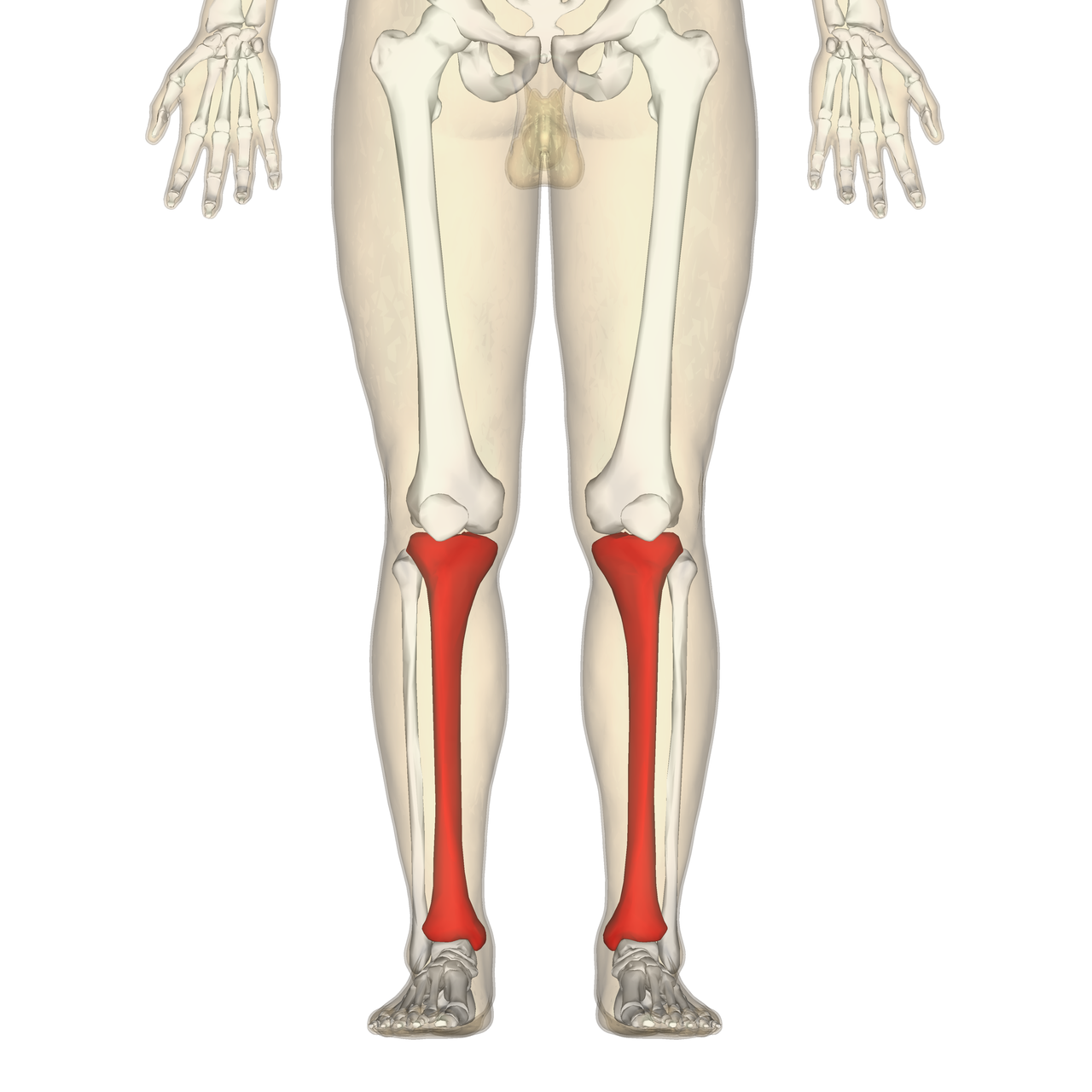
- ·Straightening bowed legs adds millimetres, not inches — the measured average after an opening-wedge osteotomy is about 4.3 mm.
- ·In adults the only real correction is an osteotomy: the bone is cut and held with a plate and screws, or with an external frame when the correction has to be gradual.
- ·Guided growth only works while growth plates are open — it is not an adult option.
- ·Axis correction and bone lengthening can be done in one treatment; the largest published series reports 640 such combined cases out of 1,103, with a mean gain of 5.6 cm.
- ·That series was reported by the designer of the device used and has not been reproduced independently; independent cosmetic-lengthening series report complications in a substantial minority of patients (37% of 131 in one Ilizarov study).
- ·Frames mean months of pin-site care and daily physiotherapy — the average bone healing time in the largest combined series was 260 days.
Quick answers
Does bow leg correction increase height?+
Slightly. The measured average after a medial opening-wedge osteotomy is about 4.3 mm, and a meta-analysis found no statistically significant change from the correction alone. A larger deformity gives back more, but the honest range is millimetres to about a centimetre — not inches.
Can leg deformity be corrected in an adult?+
Yes. Once growth plates have closed, correction means an osteotomy: the bone is cut and held in the new position with a plate and screws, or with an external frame if the correction needs to happen gradually or alongside lengthening.
How do you fix bow legs in adults without surgery?+
You cannot change the shape of an adult bone without cutting it. Exercise, orthotics and physiotherapy can offload the knee, ease symptoms and improve how you move, and they are worth doing — but they do not straighten a fixed deformity, and any product claiming otherwise is selling you something.
What is the most serious disadvantage of an external fixator?+
Infection at the pin sites, because the hardware crosses the skin for months. Reviews of the literature note there is no agreed definition of pin-site infection, which is why reported rates vary enormously; the practical expectation is that at least one site will need antibiotics during a long treatment.
Can bow legs be corrected and the legs lengthened at the same time?+
Yes, with a frame that can angulate while it distracts. The largest published series of this approach reports 640 combined correction-and-lengthening cases, with a mean gain of 5.6 cm across the whole cohort and a mean bone healing time of 260 days.
Is bow leg correction covered by insurance?+
Often, when there is a documented mechanical or arthritic indication — it is treated as joint preservation, not cosmetics. Lengthening done for height is not covered anywhere we have found, and where the two are combined, expect the lengthening rules to apply.
Sources
- 1.Betzler BK et al. No significant post-operative limb length difference following medial opening wedge high tibial osteotomy in a multi-ethnic Southeast Asian population. J Exp Orthop, 2023. — n = 91. Limb length increased by 4.3 ± 2.86 mm after MOWHTO — the direct measurement behind this article's height answer.
- 2.Kim JH et al. Leg length change after opening wedge and closing wedge high tibial osteotomy: a meta-analysis. PLoS One, 2017. — Four studies pooled. Neither technique changed leg length significantly on its own; the difference between opening and closing wedge was 8 mm.
- 3.Bowed Legs (Genu Varum, Blount's Disease) — OrthoInfo, American Academy of Orthopaedic Surgeons. — Authority for the adult treatment statement: osteotomy in skeletally mature patients, held with a plate and screws or an external frame.
- 4.Salameh G, Schmidt M. External hinge fixation system for leg lengthening and correction of axial deviations (Salamehfix 1). Int Orthop, 2025;49(11):2599–2605. — 1,103 patients treated 2000–2024; 640 combined lengthening and deformity correction; 193 stature cases; mean lengthening 5.6 cm; mean healing 260 days. Single-centre, retrospective, reported by the device's designer. Free abstract on PubMed; full text at the publisher, doi.org/10.1007/s00264-025-06652-8 (subscription).
- 5.Novikov KI et al. Cosmetic lower limb lengthening by Ilizarov apparatus: what are the risks? Clin Orthop Relat Res, 2014. — 131 cosmetic patients; complications in 37%. Independent counterweight to single-centre complication reporting.
- 6.Marwan Y et al. Cosmetic stature lengthening: systematic review of outcomes and complications. Bone Joint Res, 2020. — 795 patients across 11 studies; mean gain 6.7 cm — the scale of what lengthening, as opposed to correction, actually delivers.
- 7.Shields DW et al. Pin-site infection: a systematic review of prevention strategies. Strategies Trauma Limb Reconstr, 2022. — Notes the absence of an established definition of pin-site infection across the literature — the reason quoted rates vary so widely.
- 8.Catagni MA et al. External circular fixation: a comparison of infection rates between wires and conical half-pins. J Trauma, 2006. — 1,093 half-pins assessed in 218 patients; 3.11% infected at the point of evaluation.
Get matched with a verified clinic.
Our editor reviews your inquiry and introduces you to 2–3 clinics that fit your budget and goals. First clinic consult is usually free. We never sell your data.
Get matched — free →